
Cimarron County Projected Versus Actual Release
A projected or tentative release date is a sentence-administration estimate. It is not proof that a person departed. The actual date records when a particular agency ended its custody. Even then, release from the Cimarron County Jail might be a transfer to ODOC, another county, federal authorities, or immigration custody rather than release to the community. Each source must name the agency and event.
Pretrial custody works differently. Before judgment, there is usually no fixed sentence-expiration date to calculate. Release may depend on bond, a court order, dismissal, another hold, and final jail processing. A sentenced county inmate’s calculation requires the judgment, valid jail-time credit, and the jail’s records. ODOC calculates state terms and credits for people in its custody.
Scheduled versus actual: A projected date can move, while actual release must be confirmed through the jail or correctional agency record.
- Projected release date
- A changeable estimate based on sentence administration and applicable credits.
- Parole eligibility date
- The earliest point a qualifying case may be considered under governing law, not a promised release.
- Actual release date
- The date an agency records that its custody ended.
- Discharge date
- The end of the relevant incarceration or supervision status, which may follow physical release.
Find a Cimarron County Projected Date
Start by deciding whether the person is pretrial, serving a Cimarron County sentence, in ODOC, or in a separate federal or immigration system. The sheriff’s current roster only shows whether local custody is presently reported. Its warning says an absent person may have been released or transferred. A no-match is not a date.
- Check the current Cimarron County roster and save the booking or inmate identifier.
- Search OSCN, select Cimarron County, and read the judgment, sentence, bond, dismissal, or later order.
- If ODOC custody is possible, search the state offender record by ODOC number or name and compare the court or CRF case.
- For a county sentence, ask the sheriff’s records unit about the existing release or sentence record.
- For a state sentence, treat public status and term data as context and direct an authoritative calculation question to ODOC.
- Confirm the actual event with the agency that held custody and check for another hold.
The Cimarron County release search and record process adds VINE, court, and receiving-agency checks when a person simply disappears from the jail list. Never convert a sentence date, reception date, conviction date, or parole hearing date into the date of release.
Note: A Cimarron County court order may authorize release before jail staff complete the physical release process.
ODOC Keeps Tentative Dates Limited
The ODOC offender information page states that a particular inmate’s exact release date is confidential unless the inquirer has a legitimate need, such as a judicial or law-enforcement need. It says the inmate receives the number of days remaining at the end of each month and can calculate the tentative date or seek help from a correctional records officer or case manager. The public offender search may still show status, sentence, reception, court, and other public information.
This official distinction matters for a Cimarron County case that entered state custody. Do not promise that every public ODOC result contains a projected date. The public search can help establish identity, sentence, status, and location, while protected time-computation material remains with ODOC. A record subject can use the agency authorization form for release of incarceration or supervision records when protected personal records are needed.
The official guidance can be reviewed on the ODOC offender information page. The image below captures the state source that explains tentative discharge-date limits.
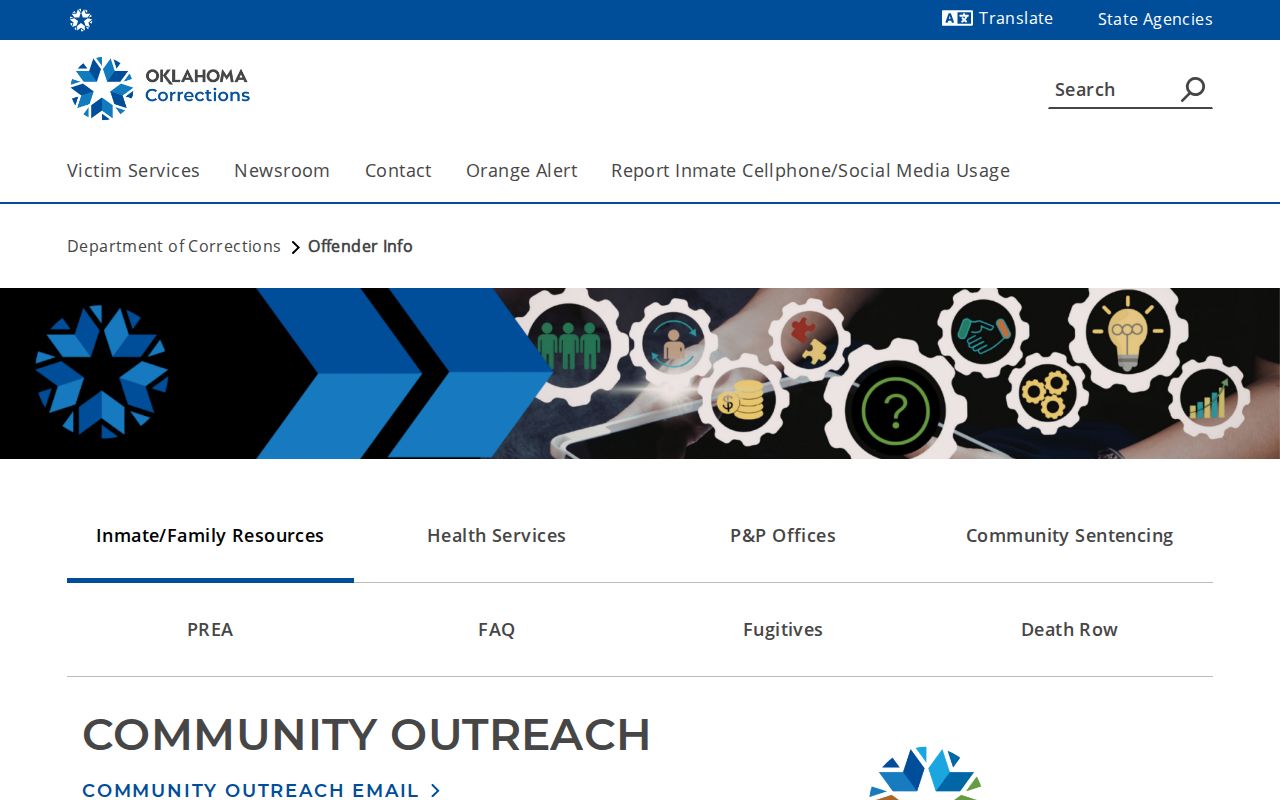
The page supports a careful answer: use the public lookup for available facts, but send an exact individual calculation to the inmate’s records officer, case manager, or authorized ODOC records channel.
Oklahoma Credits Affect Cimarron Release Dates
Oklahoma’s statutory starting point is 57 O.S. §138. One earned credit equals one day of incarceration, and monthly reductions depend on class level unless another law controls. Level 1 earns no credits, and Level 2 earns 22 per month. For an inmate with a disqualifying prior enumerated felony history, Levels 3 and 4 earn 33 and 44 per month. Without that history, Levels 3 and 4 earn 45 and 60 per month.
Those rates are not a safe public calculator. Class assignment depends on time served, conduct, and satisfactory work or program participation. The statute also includes achievement credits, offense and prior-history limits, misconduct rules, and other qualifications. Life sentences receive no earned-credit deduction. Credits can be removed through discipline. Section 138(C) allows restoration in qualifying circumstances, but restoration is discretionary rather than guaranteed.
A conceptual calculation begins with the imposed term, then accounts for valid jail or prior-custody credit, lawful earned and achievement credits, statutory minimum service, concurrent or consecutive terms, misconduct losses or restoration, interrupted service, and judgment corrections. ODOC policy OP-060211 governs sentence administration. The public lookup warns that its data are abbreviated and cannot give an exact explanation of time to be served.
Cimarron County 85-Percent Cases
Oklahoma’s “85-percent” rule is not a formula for every serious case. Title 21 O.S. §§12.1 and 13.1 apply to listed felonies committed on or after the controlling date and require at least 85 percent of the imposed sentence in ODOC before parole consideration. Credits cannot reduce service below that floor. The list includes specifically defined homicide, manslaughter, assault, robbery, rape, arson, burglary, child, trafficking, and other offenses. The exact conviction statute and offense date must match the current list.
Multiplying every sentence by 0.85 will produce false answers. The rule sets a minimum-service or parole boundary for covered crimes. It does not account for consecutive terms, holds, credit above the floor, later court action, parole decisions, or processing. A crime described in everyday speech as violent may not fit the statutory list, while a precisely defined offense may.
Read the Cimarron County judgment and the statute cited there. Then use ODOC Sentence Administration for the individual application. Public summaries cannot replace the maintained state computation.
Cimarron County Parole Date Distinctions
Parole eligibility is not discharge, and a Board hearing is not release. Title 57 O.S. §332.7 uses offense-date and case-specific rules. Crimes before July 1, 1998 can fall under older calculations. For many crimes from July 1, 1998 through October 31, 2018, the law generally uses one-third. For many crimes on or after November 1, 2018, it generally uses one-fourth. Life terms, listed violent crimes, 85-percent offenses, prior convictions, exclusions, and special procedures require separate analysis.
The Oklahoma Pardon and Parole Board may recommend, grant within its authority, pass, or deny a case. Some violent matters require gubernatorial approval. Any favorable action can still be followed by paperwork, conditions, another hold, placement, or later changes. Use the Board docket and results archive to locate the proceeding, then confirm actual prison departure through ODOC.
A VINE alert does not calculate parole eligibility. PPB also states that VINE does not provide parole notification because its written notification program is separate. The Cimarron County VINELink check remains useful for other reported custody changes.
Cimarron County PRD Docket Field
Oklahoma parole dockets use the exact abbreviation “PRD” beside fields such as inmate name, ODOC number, county, crime or count, case number, sentence date, and term. In that setting, PRD means projected release date. It is useful public planning information when the person appears on a docket. It is not the hearing date, an approval, or proof that the person passed through a prison gate.
This channel-specific public field must be reconciled with ODOC’s confidentiality rule. A Board docket may publish PRD for a person selected for that docket, while ODOC says the authoritative individual calculation is confidential absent legitimate need and remains tentative. That does not mean every offender-search detail displays PRD. Use the docket’s exact field only when the person appears there, then compare the ODOC number, Cimarron County case number, sentence date, and term.
The date can change after the docket is issued. A later Board result also answers a different question. Preserve both labels and dates, then seek ODOC evidence of the actual custody transition.
Note: PRD is projected release date on an Oklahoma parole docket, not the date of the Board hearing or physical release.
Changes to Cimarron Projected Release Dates
A tentative date changes when one of its legal or administrative inputs changes. Some factors adjust credit. Others prevent release despite a sentence calculation. The table separates the main researched causes rather than implying that each one always changes the date in the same direction.
| Factor | Possible effect | Best source |
|---|---|---|
| Earned-credit level | Monthly credit can rise or fall with class level and eligibility. | ODOC sentence record and §138 |
| Misconduct | Credits may be lost after disciplinary process. | ODOC records officer |
| Achievement credit | Qualifying credit may change the tentative calculation. | ODOC sentence administration |
| Judgment correction | Amended terms or jail-time credit can alter service. | Cimarron court record and ODOC |
| Concurrent or consecutive terms | Sentence structure changes how terms run together or in sequence. | Judgment and ODOC computation |
| Detainer or hold | One agency may end custody while another takes the person. | Holding and receiving agencies |
| Parole action | Eligibility, Board action, and final execution affect timing but do not guarantee exit. | PPB result and later ODOC status |
Escape or other interrupted service and credit restoration can also affect state calculations. A VINE event may report the outcome later, but it does not recompute the sentence. If two sources seem to conflict, prefer the record closest to the event and explain the timeline.
Cimarron County Jail Date Requests
The state credit schedule should not be imposed on a Cimarron County jail stay. Research found no published county good-time formula, weekend-release rule, processing schedule, or release-time policy. For a county sentence, obtain the judgment and ask the jail records unit about the maintained sentence or release record. For pretrial detention, track bond and court orders, then confirm actual processing with the sheriff.
The sheriff’s records page directs users to call (580) 544-2020 during administrative hours for the request form. The blank form may be sent by email or fax, but responsive records must be picked up at 409 N Logan, Boise City. No fee schedule or response-time promise is posted. Ask whether the record is ready and confirm any charge before travel.
A focused request identifies the person, booking number if known, approximate booking dates, and Cimarron case number. Ask for the existing booking and release entry, recorded release date and time, release type or destination, and receiving agency. Do not ask staff to create a projected date that the county does not maintain.
Confirm Cimarron County Actual Release
Confirmation ends with the agency record. A sheriff release entry identifies departure from the Cimarron County Jail. An ODOC Certificate of Release or state status record documents a state transition. A parole docket or recommendation remains preliminary. A court order explains legal authority but can precede final processing, and a roster absence leaves open the possibility of transfer.
For state records, ODOC Legal Services identifies Sentence Administration, Offender Records and Registries, Closed Records at 405-425-2691, and discharge inquiries at osordischarges@doc.ok.gov. Ask for public portions of the chronological incarceration or supervision record sufficient to identify release, discharge, movement to supervision, and releasing facility. Do not demand a protected future calculation.
Finally, check whether another jurisdiction took custody. County release does not rule out an ODOC transport, federal hold, another county, or eligible immigration custody. The actual date should always carry its agency and event label.